
Social Media Tools for Dental Practices — Practical Strategies to Boost Patient Engagement and Generate Leads
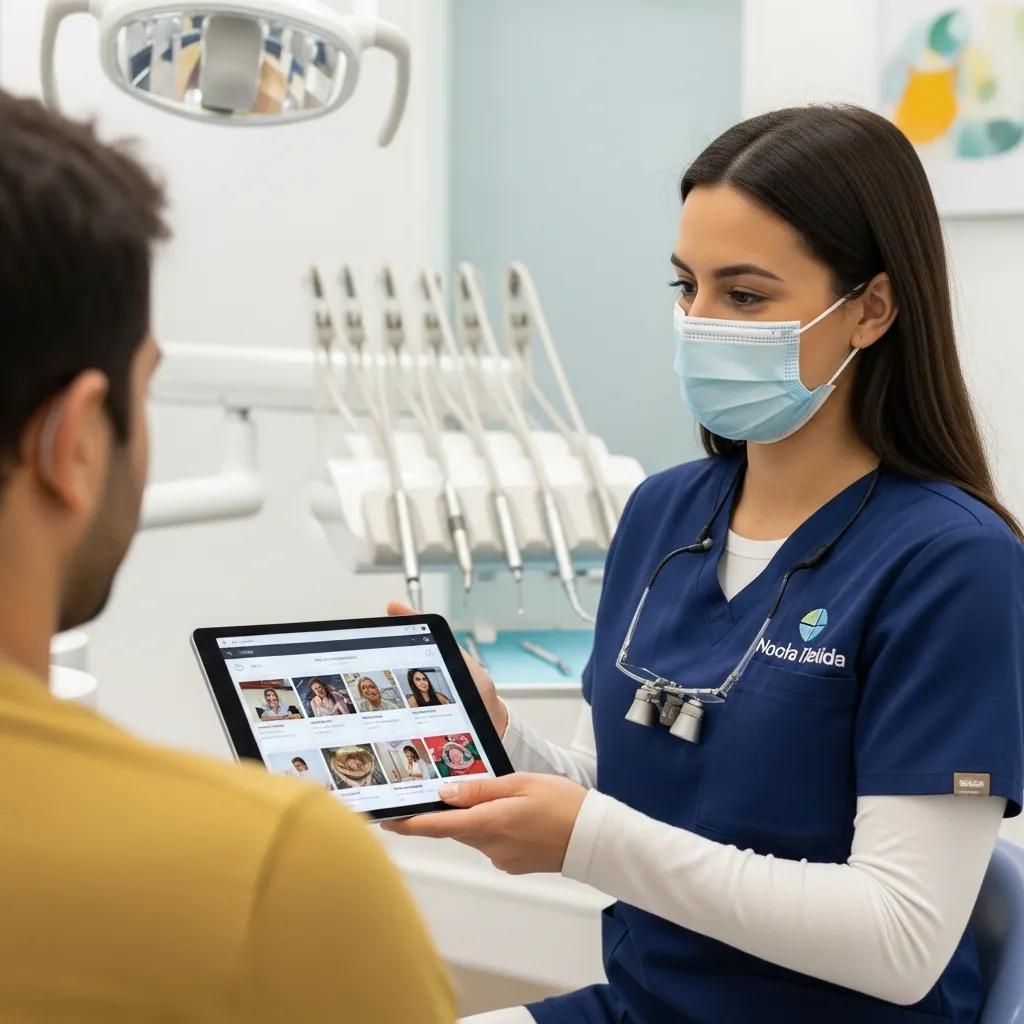
Social media is often the first place prospective patients discover a clinic — but turning likes and views into booked appointments takes a deliberate process. This guide shows which tools and platform tactics reliably increase patient engagement, surface social proof, and convert interactions into measurable leads. You’ll learn how different platforms influence patient decisions, which networks are best for discovery versus conversion, practical content and scheduling workflows, Canadian compliance guardrails for healthcare social media, and how to measure ROI with integrated analytics. We focus on clinic marketing tools and patient engagement software use-cases, mapping the specific features that close the loop from first contact to confirmed appointment. Read on for checklists, comparison tables, and step-by-step playbooks that help dental teams adopt automated posting workflows and consistent online review management.
Why Are Social Media Tools Essential for Dental Practice Marketing?
Social media tools combine discovery, social proof, and direct communication to build appointment funnels that simple directory listings can’t match. They increase visibility (reach), demonstrate credibility (reviews and before/after images), and remove friction from booking (linkable scheduling and messaging widgets). For dental clinics, tools that integrate social listening, scheduling, and messaging turn passive engagement into trackable leads and measurable conversions. Industry data shows patients increasingly consult social content and peer reviews when choosing a provider, so optimizing social profiles and implementing clinic marketing tools is essential to stay competitive. The section below breaks down how platforms affect each stage of the patient decision funnel and highlights small, repeatable tactics that raise appointment rates.
How Do Social Media Platforms Influence Patient Decisions?
Platforms map to a simple decision funnel: discovery, research, validation, then booking — and each stage needs different content and tracking. Discovery is driven by short-form video and local targeting that put your clinic in front of nearby audiences. Research relies on longer posts, testimonials, and Google Business Profile signals to demonstrate competence. Social proof — reviews, before/after photos, and peer comments — shortens trust-building and boosts conversion when paired with clear CTAs to book. Practical tactics include optimizing every profile with a direct appointment CTA, adding linkable booking widgets to bios and messages, and tagging treated conditions so your content matches local search intent. Knowing each platform’s role helps clinics spend time and ad dollars where they produce the most direct patient engagement and bookings.
What Are the Benefits of Using Social Media Tools in Dentistry?
Used correctly, social tools improve visibility, speed up communication, and accelerate referrals through shareable social proof. Engagement metrics — comments, shares, saves — tend to correlate with appointment inquiries when content includes a clear conversion path like a booking link or contact button. Automated posting and messaging lower response times and increase perceived availability, which converts more inquiries into appointments. Typical KPIs include engagement growth, review volume, appointment conversion rate, and cost-per-lead from paid campaigns. The practical outcome is a predictable, scalable pipeline where patient engagement features in social tools drive higher booking yields and greater lifetime patient value.
Which Social Media Platforms Are Best for Dental Practices in 2025?
Platform choice comes down to your objective: visibility, education, or direct conversion. Short-form video drives discovery and brand awareness, image-first networks build local trust with before/after galleries, and professional networks support referral relationships for specialists. Match content types to platform strengths so you can repurpose assets efficiently. The short platform guide below helps plan content and conversion strategy.
- Facebook: Strong for local community engagement, targeted local ads, and automated Messenger workflows that turn inquiries into bookings.
- Instagram: Best for visual storytelling — before/after carousels, Reels showing quick transformations, and link-in-bio booking widgets.
- TikTok: Great for high-reach educational clips and short procedure explainers that drive discovery among younger audiences.
- LinkedIn: Useful for specialist clinics building professional referrals, publishing case studies, and networking with other providers.
- YouTube: Ideal for longer educational content and procedure explainers that support patient research and SEO.
- Google Business Profile: Essential for local search and review aggregation; it amplifies social signals and drives appointment clicks.
This quick reference shows which platforms build visibility and which are suited to conversion-focused content. Next, we cover practical Facebook and Instagram tactics that shorten the path from message to appointment.
How Can Facebook and Instagram Enhance Dental Patient Communication?
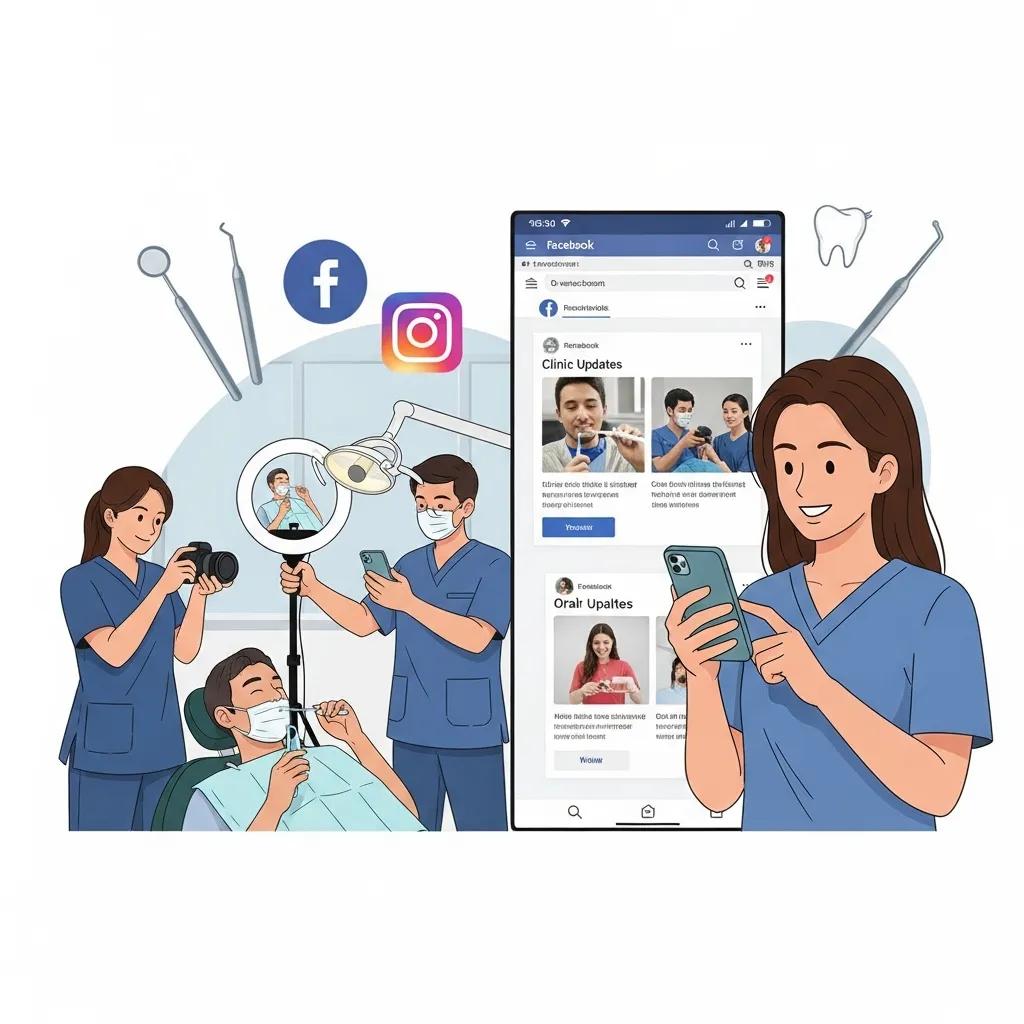
Facebook and Instagram offer direct-response features — Messenger automation, DMs, Reels, and Stories — that speed up patient communication and bookings. Messenger/DM automation can handle triage questions, collect contact details, and deliver instant booking links that reduce drop-off. Reels and Stories highlight short procedure clips and testimonials that are easy to consume and share, while local ad targeting on Facebook delivers offers and open slots to high-intent users nearby. Use message templates and clear CTA paths so each interaction can convert, and add UTM-coded links to attribute bookings back to platform activity. These patterns show how automated posting and patient engagement workflows work together to shorten conversion cycles and increase booked appointments.
What Opportunities Do TikTok and LinkedIn Offer for Dental Marketing?
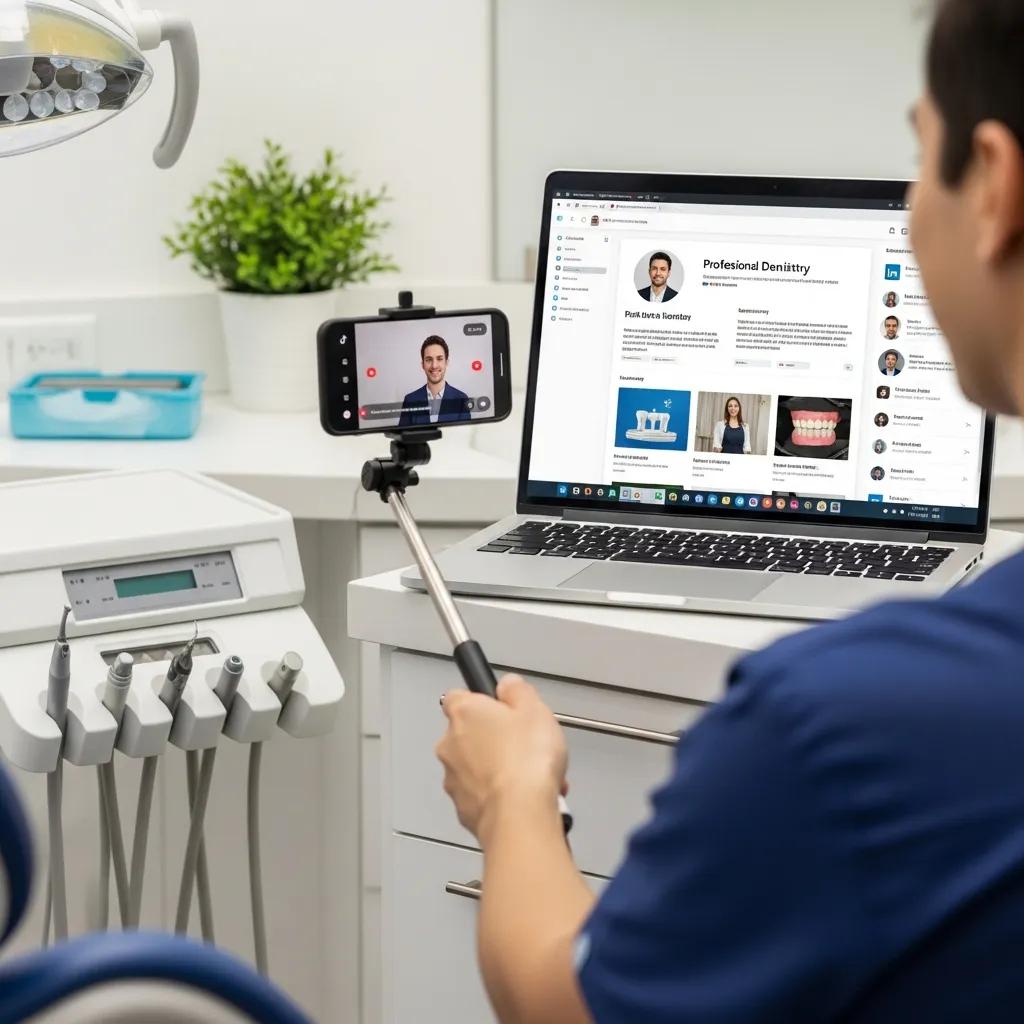
TikTok delivers high-reach discovery through short, educational videos; LinkedIn supports professional positioning and referral marketing for specialty services. On TikTok, clinics can post quick procedure explainers, patient reactions (with consent), and myth-busting clips that may reach broad audiences. LinkedIn is best for evidence-oriented content — case studies, whitepapers, and referral appeals — that influence professional decision-makers. Tone and governance differ: TikTok favors informal, energetic content that must avoid PHI exposure; LinkedIn needs more formal, evidence-based posts that build professional trust. Tailoring content to each platform’s audience lets clinics balance discovery and referral pipelines effectively.
| Platform | Best content types & strengths | Practical use-case for dental clinics |
|---|---|---|
| Local ads, Messenger, community posts | Promote new-patient specials and convert inquiries via Messenger workflows | |
| Reels, carousels, Stories | Showcase before/after galleries and short testimonials to build trust | |
| TikTok | Short educational videos, trends | Drive high-volume discovery for common treatments and brand recognition |
| Long-form posts, case studies | Secure referrals for specialist services and engage professional networks | |
| YouTube | Long-form video tutorials | Host procedure explainers that support patient research and SEO |
| Google Business Profile | Reviews, local listing signals | Improve local search discoverability and capture appointment clicks |
This table helps match each platform’s strength to your content goals so you can prioritize resources for the biggest conversion impact.
How Do DentalTek’s IT Solutions Integrate with Social Media Marketing?
DentalTek’s IT services link patient communication, online reputation, scheduling automation, and CRM data into a single operational loop. These integrations turn social media leads into tracked appointments by capturing the contact source, automating follow-ups, and triggering review requests after visits. Automation shortens response time, preserves lead context, and increases booking completion — critical when social inquiries are time-sensitive. The section below outlines key feature modules, their benefits for social media marketing, and a comparison table to help clinics prioritize what to implement first.
DentalTek provides modules that bridge social conversations with practice operations: two-way messaging for social DMs/comments, booking widgets for profiles, and automated review sequences after visits. These capabilities support lead capture and attribution with the goal of improving conversion rates and strengthening online review management for dental practices.
| Feature Module | What it does | Benefit for social media marketing |
|---|---|---|
| Two-way messaging | Routes social DMs and SMS into the practice inbox | Speeds responses and preserves inquiry context to improve booking rates |
| Booking widgets | Linkable schedulers embedded in profiles and messages | Removes friction between interest and appointment creation |
| Review generation | Automated post-visit review prompts | Increases review volume and strengthens social proof for discovery |
| CRM integration | Tags social source to the patient record | Enables attribution and targeted follow-up campaigns |
| Analytics dashboard | Aggregates engagement and conversion metrics | Gives insight to optimize ad spend and content performance |
This comparison shows how each DentalTek feature supports measurable social outcomes and helps clinics focus on the modules that drive the quickest lift in lead capture and appointment conversion.
What Patient Engagement Features Support Social Media Efforts?
Features like two-way messaging, automated follow-ups, templated review requests, and linkable booking widgets convert social interactions into trackable practice actions. Two-way messaging connects social channels with practice systems so staff can reply quickly without rekeying data, preserving the referral context and raising booking completion. Automated follow-ups re-engage leads who viewed content but didn’t book, while review requests gather social proof that improves discovery for future patients. Link tracking in widgets and messages lets clinics attribute appointments to specific posts or ads. Together, these patient engagement components shorten the path from interest to appointment and support reliable lead capture.
How Does Online Reputation Management Improve Dental Practice Visibility?
Reputation management aggregates reviews, highlights trends, and provides templated responses to maintain a consistent voice and improve local search performance. Review velocity — how quickly reviews accumulate — affects local rankings and patient trust; automated prompts after visits increase velocity while response templates ensure timely engagement. Reputation tools centralize alerts so clinics can address negative feedback promptly and document resolutions, preserving public trust. Sharing positive reviews in social posts reinforces social proof and increases click-throughs on appointment CTAs. When paired with targeted social content, a coordinated reputation workflow boosts discoverability, shortens patient decision time, and improves conversion rates.
What Are Effective Content and Scheduling Strategies for Dental Social Media?
A strong content strategy rests on clear content pillars, consistent scheduling, and repurposing assets across platforms to maximize reach without adding production time. Typical pillars for dental clinics are: educational posts, social proof (testimonials and before/after), promotions or offers, and behind-the-scenes culture content that humanizes the team. A disciplined cadence — batching content creation and using scheduling tools — keeps your presence steady and makes performance analysis easier. Automation tools let clinics queue posts, publish across platforms, and attach UTM tracking for attribution. The next sections explain how to operationalize scheduling and which visual formats perform best.
Adopt a content calendar and a batching routine to maintain quality while saving staff time. Produce a week’s worth of content in a single session, repurpose clips for Reels, Stories, and TikTok, and keep a library of approved captions and consent documents. This reduces compliance risk and keeps messaging consistent even during rapid posting.
- Educational content: Explain procedures, aftercare, and common patient questions to reduce anxiety and pre-qualify leads.
- Social proof: Share anonymized testimonials and before/after visuals (with consent) to build trust.
- Promotions and offers: Use time-limited deals or new-patient specials to create urgency and trackable conversions.
- Clinic culture: Post team introductions and behind-the-scenes moments to humanize your practice and support retention.
This balanced content mix preserves reach while driving consistent patient engagement. The next subsection explains how automated scheduling turns this plan into repeatable, measurable activity.
How Can Automated Content Scheduling Streamline Dental Marketing?
Scheduling tools let clinics batch-create content, set cross-platform posting schedules, and attach UTM parameters for conversion tracking. Start with a monthly plan, create assets in one production session, and queue posts to publish at times the analytics show perform best. Use recurring templates for themes (for example, Education Tuesday or Testimonial Thursday) so cadence doesn’t require daily effort. Ensure each scheduled post has a clear CTA and a tracking link so CRM workflows can attribute bookings to the originating content. Integrating scheduling with your CRM and booking widgets closes the loop by recording source data on the patient record for performance-based adjustments.
What Visual Content Works Best for Engaging Dental Patients?
Effective visual content prioritizes clarity, consent, and storytelling to reduce patient anxiety and demonstrate outcomes. Before/after photos, short procedure explainers (30–60 seconds), patient testimonials, and staff introductions perform well on Instagram Reels, TikTok, and Facebook when produced with consistent lighting and readable captions. Always secure written consent for identifiable images and opt for de-identified visuals or animations when consent isn’t available. Repurpose long-form educational videos into short clips and captioned posts to extend their life across platforms while staying compliant. These approaches increase engagement and support social media lead capture by delivering clear, trustworthy evidence of clinical outcomes.
| Tool | Feature | Application |
|---|---|---|
| Scheduling platform | Cross-posting and queuing | Publish consistent content across channels without manual posting |
| Link tracking | UTM parameters | Attribute appointments to specific posts and ads |
| Content library | Asset management | Reuse approved visuals and consent documents across posts |
| CRM integration | Source attribution | Record social lead origin in the patient record for ROI analysis |
This tool mapping shows how operational systems support creative strategy and drive iterative improvement.
How Can Dental Practices Ensure Compliance in Social Media Marketing?
Compliance starts with clear boundaries between protected health information and public content, documented consent for any identifiable patient images, and secure channels for sharing appointment-specific PHI. Clinics should distinguish PHI from non-PHI content, avoid treatment details in public posts, and use secure links for sensitive exchanges. Implement consent capture workflows, keep audit trails, and use role-based access for posting tools. Technical safeguards and staff training reduce the risk of accidental disclosure while enabling compliant engagement. The checklist below lists practical do’s and don’ts to keep social campaigns within compliance expectations.
- Do create and store written consent for any identifiable patient images or testimonials.
- Do use templated, non-identifying language when sharing case highlights unless explicit consent is recorded.
- Do restrict staff access to posting tools with role-based permissions and activity logs.
- Don’t share treatment details, diagnoses, or appointment specifics in public comments or posts.
- Don’t exchange PHI through unencrypted direct messages or public comment threads.
- Don’t post patient images without documented, signed consent that specifies platform use.
Following this checklist reduces legal risk and protects patient privacy while still allowing clinics to leverage social proof. Below we explain how DentalTek’s controls support compliant workflows in practice.
What Are Key Privacy Guidelines for Dental Social Media Use?
Never post PHI without explicit consent, avoid specific treatment details in public posts, and ensure private communications use secure, auditable channels. Consent forms should specify scope (which platforms, duration, and editing permissions) and be stored so they’re retrievable for audits. Staff training on compliant messaging and a clear escalation path for potential breaches are essential. When referencing outcomes, prefer de-identified imagery or generic testimonials that describe satisfaction without clinical specifics. These guidelines protect patient trust while enabling effective social engagement.
How Does DentalTek Support Compliance and Patient Data Protection?
DentalTek helps clinics meet compliance needs with secure messaging, encryption, role-based access controls, and audit logs that record who accessed or transmitted patient-related information in social workflows. These safeguards create an auditable trail for consent capture and message exchanges involving scheduling or follow-up. By integrating consent capture into practice workflows, DentalTek helps clinics demonstrate compliance in reviews and reduce the risk of accidental PHI exposure. Clinics can request a demo or support session to see how these controls map to their privacy policies and local regulations.
How Can Dental Practices Measure Social Media Marketing Success and ROI?
Measure social media effectiveness by tracking engagement metrics, lead events, appointment conversion rates, and cost-per-lead, then attribute outcomes to channels using UTMs and CRM data. KPIs should include engagement rate, number of social-sourced inquiries, appointment conversion rate from social leads, and revenue per converted lead to calculate ROI. Use consistent attribution models — single-touch or multi-touch — and capture source data at lead intake for the most reliable appointment attribution. The table below maps common metrics to tracking methods and suggested actions so clinics can prioritize what to measure first.
| Metric | How it’s tracked | What it shows / how to act |
|---|---|---|
| Engagement rate | Platform analytics (likes, comments, shares) | Shows content resonance; test variations to increase reach |
| Social inquiries | Messaging logs and form submissions | Shows lead volume; ensure rapid follow-up to improve conversion |
| Appointment conversion rate | CRM appointment records with source | Measures social-to-booking effectiveness; optimize CTAs and follow-up |
| Cost-per-lead | Ad spend divided by leads | Guides ad budget allocation; reduce CPL by improving landing and booking flow |
This KPI mapping clarifies which data points matter and how to act on them. The sections that follow outline tools and a playbook for turning data into continuous improvement.
What Analytics Tools Track Patient Engagement and Lead Generation?
Combine native platform analytics (Facebook Insights, Instagram Insights, TikTok analytics) with third-party dashboards and CRM reports for a unified view of engagement and lead flow. Use UTM-coded links and booking widgets to capture the referring social post, and ensure the CRM records the original source at intake so appointments can be connected to content. Dashboards that merge platform metrics with appointment data give timely alerts for spikes or drops and support A/B testing of content and posting times. Run regular reporting — weekly for engagement, monthly for conversion and ROI — to keep your strategy evidence-based.
How Does Data-Driven Insight Improve Dental Social Media Strategies?
Follow a simple three-step playbook — measure, test, iterate — to turn analytics into better ROI: record baseline KPIs, A/B test headlines and media formats, then adjust posting cadence and ad targeting based on conversion results. For example, test an educational Reel against a testimonial Reel, measure which drives more booking clicks, then reallocate organic and paid resources to the better performer. Use consistent conversion windows and attribution rules to avoid misattribution, and scale content that produces the best cost-per-appointment. Over time this iterative approach improves spend efficiency and increases the share of social interactions that convert to appointments.
If you want faster mapping of social leads to appointments, DentalTek’s analytics integrations can feed social source data into CRM records and dashboards; clinics can request a trial or demo to validate attribution flows in a real setting.
Practical next steps: capture source data at first contact, automate follow-up workflows to reduce drop-off, and schedule regular KPI reviews to refine content and ad allocation.
DentalTek is an IT partner focused on lead generation and operational integration for dental clinics across Canada. If you’d like to see how patient communication, review management, and CRM integrations can be configured to capture social media leads, request a demo or support session to validate workflows and compliance features.
Frequently Asked Questions
1. What types of content should dental practices prioritize on social media?
Focus on a balanced mix: educational posts, social proof, promotions, and behind-the-scenes culture. Educational content answers common patient questions and eases anxiety. Social proof — testimonials and before/after visuals (with consent) — builds trust. Promotions create urgency and measurable conversions. Behind-the-scenes posts humanize your team and strengthen retention. Together, this mix keeps your feed useful and engaging.
2. How can dental practices effectively measure their social media ROI?
Track KPIs like engagement rate, appointment conversion rate, and cost-per-lead, and use UTM parameters plus CRM data to attribute leads to specific posts or campaigns. Regular analysis shows what’s working and where to reallocate budget or effort. Consistent tracking lets you optimize toward the content and channels that produce bookings.
3. What are the best practices for ensuring compliance in dental social media marketing?
Obtain explicit, written consent for any identifiable patient images, avoid sharing PHI in public posts, and use secure channels for private communications. Implement consent workflows, keep audit logs, restrict posting permissions, and train staff on compliant messaging. These steps protect patient privacy while allowing you to use social proof responsibly.
4. How can automated scheduling tools benefit dental practices?
Scheduling tools let you batch content, publish across platforms automatically, and add tracking parameters for attribution. They save staff time, keep messaging consistent, and make performance analysis simpler — all of which help you scale social activity without increasing daily workload.
5. What role does online reputation management play in dental marketing?
Reputation management helps you monitor and respond to reviews quickly, which influences prospective patients and local search rankings. Increasing review velocity and responding professionally to feedback builds trust and discoverability. When combined with social content, reputation signals amplify social proof and drive more appointment clicks.
6. How can dental practices utilize TikTok and Instagram effectively?
On TikTok, publish short, educational, and relatable videos that drive discovery among younger users. On Instagram, use Reels, Stories, and carousels to showcase transformations and testimonials. Always include clear CTAs to encourage bookings, and keep a consistent posting rhythm to maintain audience engagement.
7. What are the advantages of using CRM integration in social media marketing?
CRM integration captures the social source at lead intake, enabling accurate attribution and faster follow-up. It streamlines workflows so staff can respond quickly and keeps source data on the patient record for ROI analysis. That visibility helps you refine campaigns and improve conversion over time.
Conclusion
When used strategically, social media tools can meaningfully increase patient engagement and drive more booked appointments for dental practices. Integrating these tools with scheduling, messaging, and CRM systems creates a reliable lead pipeline backed by social proof and measurable results. Adopting automated workflows and analytics lets clinics optimize spend, improve conversion rates, and scale predictable growth. To see how our solutions can be configured for your practice, request a demo and we’ll walk through the workflows and compliance features that matter most.