
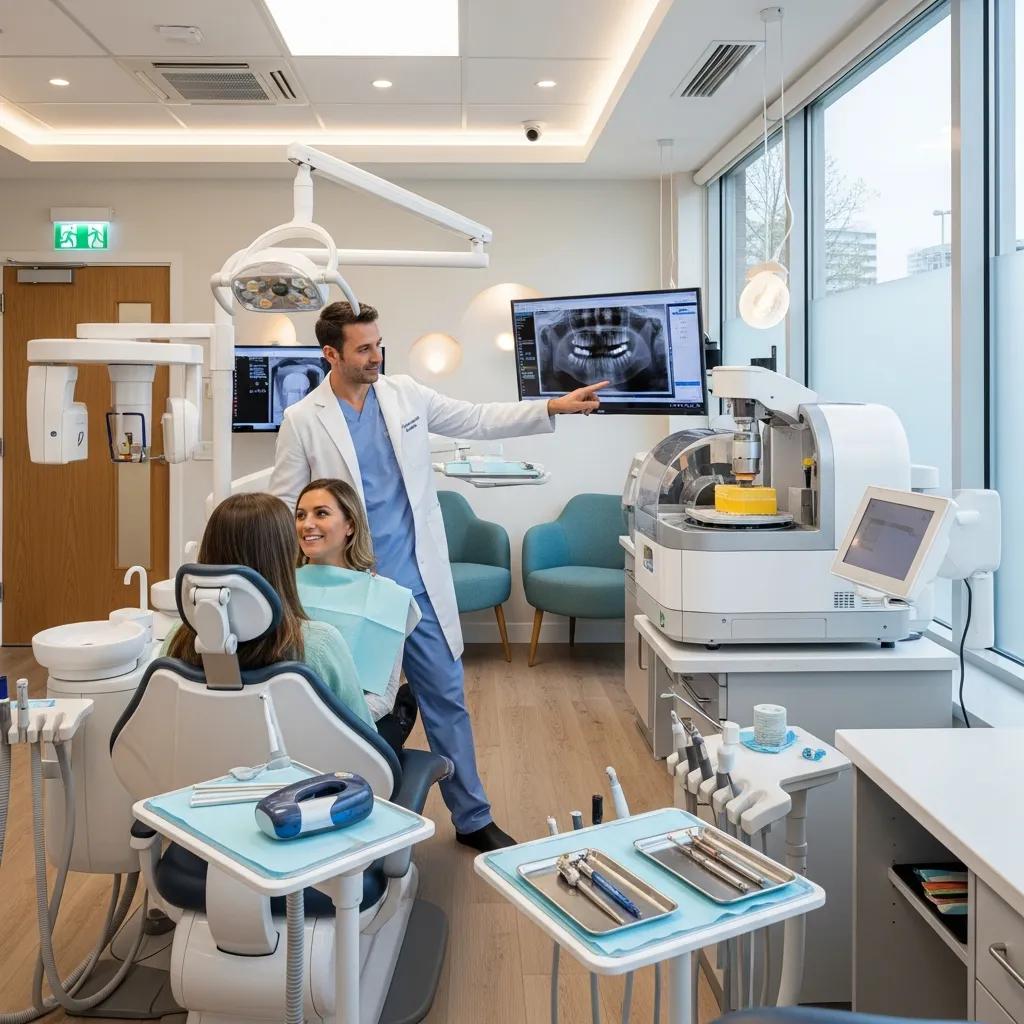
Dental IT Investments: Costs, ROI, and Financing Options
IT investment for dental practices means the capital and operating costs needed to buy, deploy and maintain the digital hardware, software and services that support both clinical care and practice operations. The right technology removes manual bottlenecks, sharpens diagnostic accuracy and creates measurable efficiency and revenue gains that justify financing. This guide covers why financing matters in Canada, the common funding vehicles clinics use, how to build lender-ready ROI cases, and where a technical partner fits in the lifecycle. You’ll learn which technology categories are worth financing, a practical comparison of loans, leases and lines of credit, step-by-step ROI workups lenders expect, and finance approaches for advanced items like AI, CAD/CAM and 3D printing. Throughout, we show how a specialist IT partner can provide the documentation, audits and implementation lenders want—without losing focus on financing strategy and underwriting requirements.
What Are the Key IT Investments for Modern Dental Practices?
Key IT investments include the hardware, software and managed services that enable digital diagnostics, smoother patient workflows and secure data continuity. These replace analogue steps with digital systems that speed chairside tasks, centralize patient records and lower administrative overhead—delivering both clinical and financial benefits. Common categories include digital imaging, intraoral scanners, CAD/CAM systems, practice management and imaging software, AI diagnostic tools, cybersecurity and cloud backup. Knowing these categories helps practice owners decide which items to capitalize, lease or treat as operating expenses based on replacement cycles and expected ROI. Below we outline specific investments, typical financing approaches and the business benefits that support borrowing.
This list highlights the primary IT purchases dental practices weigh and why they often need financing. Each item links the technology to an appropriate financing mindset and expected business outcome.
- Digital imaging systems (digital X‑ray, CBCT) — high-value hardware that improves diagnostics and case acceptance.
- Intraoral scanners — replace traditional impressions, speed workflows and enable digital prosthetics; often financed via lease or equipment loan.
- CAD/CAM milling and 3D printers — enable same‑day restorations and more efficient lab workflows; typically capital investments that can create new revenue streams.
- Practice management and imaging software — centralizes ops and billing; commonly financed through vendor bundles or capitalized purchases.
- AI diagnostic tools and advanced software modules — enhance detection and treatment planning; financed either as CAPEX or subscription bundles.
- Cybersecurity and cloud backup — protect revenue continuity and patient data; often budgeted as OPEX with the initial setup financed.
Research shows clear trade-offs between CAD/CAM milling and 3D printing in dental workflows and clinical applications.
CAD/CAM & 3D Printing for Dental Practice Efficiency
This review compares CAD/CAM approaches in dentistry, focusing on milling versus 3D printing across precision, material properties, clinical use cases and workflow efficiency. Milling — a subtractive process — is known for high precision and durable restorations such as crowns and bridges that require long-term stability. 3D printing — an additive process — gives greater design flexibility and speed, especially for temporaries and complex geometries.
CAD/CAM technology in dentistry: a comparative analysis of milling and 3D printing techniques, 2025
DentalTek integration note: DentalTek supports clinics with technical assessments, system takeovers and ongoing monitoring for many of these technologies, and can provide demos or technical support to clarify scope for lenders and vendors.
Introductory table: map technologies to financing approaches and business benefits.
| Technology Category | Typical Financing Approach | Primary Business Benefit |
|---|---|---|
| Digital imaging (X‑ray, CBCT) | Equipment loan or lease | Faster diagnostics and higher case acceptance |
| Intraoral scanners | Lease‑to‑own or equipment loan | Shorter chair time and better prosthetic accuracy |
| CAD/CAM & 3D printing | Equipment loan or vendor financing | New same‑day service revenue streams |
| Practice management & imaging software | Subscription or capitalized purchase | Streamlined billing and scheduling |
| AI diagnostics | Capital purchase or subscription bundle | Improved detection and treatment planning |
| Cybersecurity & Cloud Backup | OPEX with initial setup financed | Business continuity and lower operational risk |
Which Dental Equipment and Technologies Require Financing?
Many dental purchases combine a significant upfront cost with measurable productivity or revenue upside, which is why clinics finance them. High‑cost hardware such as digital X‑ray suites, CBCT scanners, intraoral scanners, CAD/CAM mills and industrial 3D printers are typical candidates—practices finance these to preserve working capital. Software platforms, imaging suites and AI modules can carry implementation fees and integration costs that clinics prefer to finance or bundle with hardware. Key financing drivers include capital intensity, replacement cycles, vendor upgrade paths and a desire to match payments to the asset’s benefit period. Presenting lenders with clear technical specs, vendor quotes and realistic productivity improvements strengthens applications by tying costs to measurable returns.
The next section explains how these IT solutions translate into operational and clinical gains that support financing rationale.
How Do IT Solutions Enhance Dental Practice Operations and Patient Care?
IT solutions reduce administrative time, automate scheduling and recalls, and enable faster treatment acceptance using visual tools and accurate digital records. Intraoral scanners cut impression times and remakes; CAD/CAM systems make same‑day crowns possible, increasing per‑visit revenue; integrated practice management systems reduce billing errors and speed claims. Clinically, AI‑assisted diagnostics and high‑resolution imaging improve detection and planning, raising patient confidence and outcomes. Operational improvements—shorter chair times, fewer visits, and simpler billing—produce lender‑relevant metrics such as revenue per chair and utilization rates. Translating these benefit pathways into conservative, lender‑friendly projections helps practices justify financing.
What Financing Options Are Available for Dental IT Investments in Canada?

Canadian dental practices can choose from several financing vehicles for IT purchases, each differing in term, collateral and approval speed. Common options include equipment loans, equipment leases, lines of credit, vendor financing programs and bank or government‑backed small business loans. Each approach affects ownership, cash flow and tax treatment differently, so match the vehicle to your financial goals and the asset’s useful life. Lenders typically ask for technical specs, vendor quotes and cash flow projections—robust documentation improves approval odds and speeds. The table below summarizes typical terms and trade‑offs to help you choose.
Introductory comparison table: quick reference for loan types.
| Financing Vehicle | Typical Term / Speed | Collateral / Notes |
|---|---|---|
| Equipment loan | 2–7 years; moderate speed | Asset often used as collateral; ownership transfers to borrower |
| Equipment lease | 2–5 years; faster approvals | Preserves cash, may include maintenance; end‑of‑term options vary |
| Line of credit | Revolving; fast access | Unsecured or partially secured; flexible for OPEX and smaller purchases |
| Vendor financing | Varies; can be fast | May bundle hardware and software; terms depend on vendor programs |
| Government‑backed / Bank loans | Longer terms; slower approval | Lower rates possible; stricter documentation and credit requirements |
Practical next steps when evaluating financing options:
- Gather itemized vendor quotes and technical specifications for each planned purchase.
- Prepare a basic cash‑flow projection showing incremental revenue or cost savings tied to the investment.
- Compare total cost of ownership across purchase, lease and subscription models.
- Request pre‑qualification estimates from multiple lender types to understand likely rates and terms.
Choosing the right vehicle means balancing cash flow, ownership goals and tax implications. The next section explains loan and lease mechanics to guide that choice.
DentalTek note on financing role: DentalTek does not lend money. We provide technical assessments, system takeovers and implementation services that help clinics create lender‑ready documentation and choose vendors. If you need a demo or technical scoping to support a loan application, contact DentalTek for guidance.
How Do Dental Equipment Loans and Leasing Work?
An equipment loan is a term loan that funds the purchase of dental hardware; you own the asset and repay over a fixed period. A lease is a contract to use equipment for a set term with periodic payments—ownership usually stays with the lessor unless you have a purchase option. Key decision factors include cash‑flow impact, tax treatment and whether you prefer ownership or access to newer technology. Consider upfront cash, maintenance responsibilities and residual‑value risk. Lenders evaluate creditworthiness and often take the equipment as collateral for loans; leases can reduce initial capital outlay but may cost more over time depending on terms.
This sets up the contrast between bank or government‑backed lending and alternative lenders, which we cover next.
What Are the Benefits of Government-Backed and Bank Loans for Dental Practices?
Government‑backed and traditional bank loans usually offer longer terms and lower interest rates than many alternative lenders, making them attractive for large IT investments. These loans lower monthly payments and help long‑term planning, but they require more documentation, financial history and sometimes personal guarantees. Approval depends on credit profiles, tax filings and realistic financial projections tied to the financed equipment. For clinics that can meet these requirements, bank or government‑backed loans often deliver the most cost‑effective long‑term financing. Conservative projections and solid technical documentation improve your chances of favourable terms.
Benefits and trade‑offs of bank/government options:
- Lower interest rates and longer repayment horizons than many alternatives.
- Predictable repayment structures that support capital planning.
- Higher documentation and qualification requirements that demand preparation.
How to Build a Strong Business Case and Calculate ROI for Dental IT Financing?
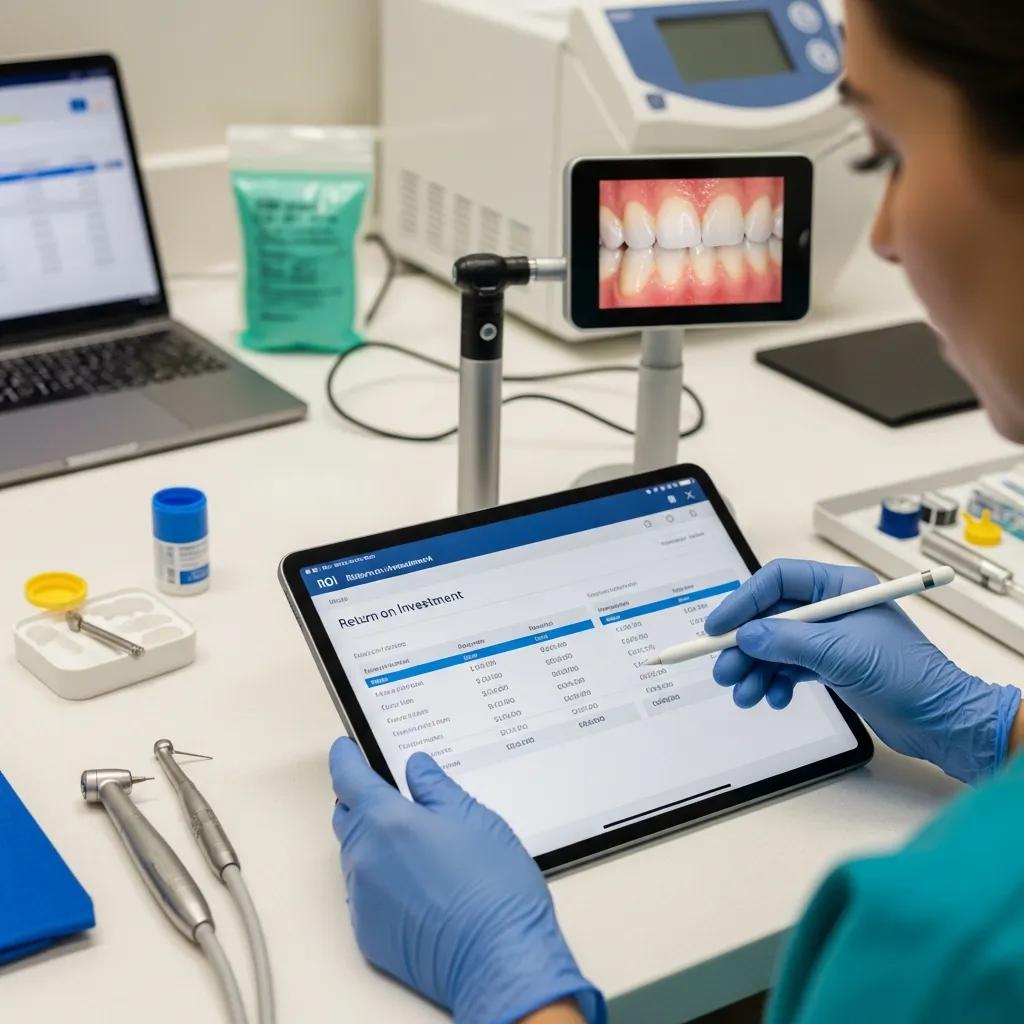
A strong financing case ties cost to measurable benefits with a clear ROI formula and lender‑ready documentation. The core approach calculates net benefit over a defined period, then compares it to the total investment. Lenders want evidence: vendor quotes, implementation timelines, baseline metrics (production per chair, treatment acceptance) and conservative post‑implementation projections. An IT audit that quantifies downtime reductions, productivity gains and backup reliability converts technical improvements into financial metrics lenders recognize. Below are the key metrics underwriters expect, a simple ROI formula with an example, and a compact table of measurement methods.
ROI formula and short example (useful for quick reference):
- ROI = (Annual incremental benefit − Annual costs) / Total initial investment
- Example: If new CAD/CAM equipment generates $60,000 incremental annual revenue and adds $10,000 in annual costs with a $180,000 investment, ROI = ($60,000 − $10,000) / $180,000 = 27.8%.
Metrics table: lender‑ready KPIs and how to measure them.
| Metric | How to Measure | Typical Data Sources |
|---|---|---|
| Revenue per chair | Total production divided by active chair hours | Practice management reports, production ledgers |
| Treatment acceptance rate | Accepted treatment plans divided by proposals | Clinical records, patient communications |
| Time per procedure | Average chair time before and after deployment | Appointment logs, scheduling data |
| Downtime frequency | Count and duration of clinical interruptions per period | IT monitoring reports, vendor service logs |
| Backup verification | Frequency and success rate of backups | Backup job reports, SLA documents |
Steps to prepare lender‑ready documentation:
- Commission an IT audit that maps current architecture, failure points and recommended scope.
- Collect itemized vendor quotes and clear implementation timelines for each financed item.
- Create conservative financial projections showing device‑specific gains tied to revenue and savings.
- Assemble service agreements, backup verification logs and vendor warranties for lender review.
DentalTek example: DentalTek can deliver IT audits, system takeovers and ongoing monitoring that provide the technical inputs lenders need; clinics can request a demo or support to gather these materials and populate loan applications.
What Metrics Demonstrate the Value of IT Investments in Dentistry?
Lenders focus on a handful of measurable KPIs: revenue per chair, treatment acceptance rate, average case value and reductions in admin time. Measuring these requires baseline extraction from practice management systems and follow‑up data after deployment to show the delta attributable to technology. Operational gains—shorter procedure times and fewer appointments per case—translate directly into capacity gains and revenue uplift, while IT metrics like backup success rate and time‑to‑recovery lower perceived business risk. Lenders also value SLAs and monitoring reports that show proactive maintenance. Collecting these metrics before financing builds a credible before‑and‑after story for underwriters.
How to Present Financial Projections to Secure IT Investment Loans?
Loan projections should be conservative, clearly state assumptions and include stress tests that show how the practice will meet repayments under different scenarios. A practical projection template includes a revenue uplift line tied to adoption rates, maintenance and subscription costs, amortization or lease schedules, and sensitivity analysis for slower uptake. Append supporting documents—vendor quotes, IT audit findings and service agreements—to validate assumptions. Highlight predictable savings (for example, reduced lab fees with CAD/CAM) and continuity improvements that protect revenue. Lenders respond best to projections that translate technical features into cash‑flow impacts and include contingency buffers.
Projection components checklist:
- Baseline revenue and production for the prior 12 months.
- Expected incremental revenue and cost savings from the investment.
- Amortization or lease payment schedule and ongoing operating costs.
- Sensitivity scenarios showing conservative, expected and optimistic adoption rates.
These elements help lenders assess debt service capacity and risk, speeding approvals when paired with solid technical documentation.
Which Advanced Technologies in Dentistry Require Specialized Financing?
Advanced technologies—AI diagnostic platforms, integrated CAD/CAM workflows, high‑resolution 3D printers and teledentistry solutions—often need specialized financing because of higher upfront costs and fast innovation cycles. These systems are frequently bundled with subscriptions, maintenance contracts and consumables, which complicates financing and can steer clinics toward vendor finance or hybrid solutions. Lenders evaluate not only capital cost but vendor reputation, support agreements and projected revenue uplift. Cybersecurity and cloud backup also fit here: strong data protection reduces operational risk and is viewed favorably by underwriters. Understanding vendor bundles and maintenance obligations is crucial when structuring finance for these items.
Reasons advanced tech may need specialized financing:
- High initial capital plus ongoing subscription or maintenance costs.
- Rapid obsolescence affecting residual value and financing terms.
- Complex vendor ecosystems that may require bundled financing for hardware and software.
- Need for documented support and SLAs that lenders will review.
How Can AI, CAD/CAM, and 3D Printing Be Financed in Dental Practices?
AI platforms, CAD/CAM systems and 3D printers are commonly financed via equipment loans, lease‑to‑own programs or vendor finance that bundles hardware, software subscriptions and maintenance. Vendor finance can simplify procurement by combining capital and recurring costs into one monthly payment that tracks with revenue from new services. Leases offer upgrade paths that reduce obsolescence risk; loans give ownership and resale value but often require larger down payments. When preparing a package, include forecasts for maintenance and consumables, training time and projected incremental revenue from same‑day services. Lenders prefer transparent vendor relationships and clear operational plans showing how the tech will generate cash flow to service debt.
What Are the Financing Considerations for Cybersecurity and Cloud Backup Solutions?
Cybersecurity and cloud backup may be treated as operating expenses (OPEX) or capital expenditures (CAPEX) depending on procurement and accounting choices, and that affects financing. When an initial setup requires hardware and significant configuration, lenders may allow financing of those upfront costs as capitalized items; recurring managed security and backup subscriptions are typically expensed. Lenders see robust cybersecurity and verified backups as risk mitigants to revenue disruption, so providing SLAs, backup verification logs and evidence of proactive monitoring strengthens a financing case. Include service agreements and recovery time objectives when presenting these solutions to lenders.
How Does DentalTek Support Your IT Investment and Financing Journey?
DentalTek is a technical partner that helps practices scope, document and implement IT investments in ways lenders can evaluate with confidence. We perform IT audits, handle system takeovers with data safety as a priority, and provide ongoing maintenance and monitoring that create the deliverables lenders request. Our service areas—Managed Services, Network Support, Cyber Security and Cloud Backup—translate into audit reports, backup verification and uptime records that strengthen loan applications. While DentalTek does not provide financing, we support vendor selection and produce the technical documentation and demos that speed lender review and reduce perceived project risk. Contact DentalTek to review project scope and documentation needs.
How DentalTek’s services support financed projects:
- Managed Services: continuous system monitoring and incident logs that show operational stability.
- Network Support: documented network architecture and redundancy that lenders assess for uptime risk.
- Cyber Security: security assessments and SLAs that reduce lender concern about breach‑related revenue loss.
- Cloud Backup: backup verification reports and recovery procedures that demonstrate business continuity.
What Specialized IT Services Does DentalTek Provide for Dental Practices?
DentalTek offers Managed Services, Network Support, Cyber Security and Cloud Backup tailored for dental clinics, with a focus on continuity, data safety and operational readiness. Managed Services include proactive health monitoring and patch management to reduce downtime; Network Support ensures connectivity and local network design meet clinical workflow needs. Cyber Security emphasizes layered defenses and policy guidance to protect patient data; Cloud Backup shortens recovery time and supports continuity plans. For financing, DentalTek can produce the audit reports, backup logs and system specifications lenders expect when evaluating investments.
How Can Partnering with DentalTek Maximize Your IT Investment ROI?
Working with a specialized IT provider like DentalTek helps maximize ROI by cutting unplanned downtime, stabilizing operating costs through managed services, and ensuring new technology is deployed correctly and quickly. Proactive monitoring reduces emergency repairs; documented SLAs give lenders confidence that operational risk is mitigated. Faster deployment and smoother integration accelerate time‑to‑benefit, improving the likelihood that projected revenue uplifts appear early in the repayment cycle. Presenting lenders with ongoing service contracts and monitoring reports shows a credible plan for sustaining technology performance and can lead to better terms or faster approvals.
Lender‑relevant benefits of an IT partner:
- Lower downtime and emergency repair costs through proactive monitoring and maintenance.
- Predictable operating expenses via managed services that simplify budgeting.
- Stronger loan applications backed by audit reports, SLAs and backup verification evidence.
What Are the Unique Considerations for Dental IT Financing in the Canadian Market?
Canadian practices face specific financing considerations around lender types, tax treatment and provincial regulations that shape IT investment decisions. Lenders range from major banks and regional institutions to specialized healthcare lenders and fintechs—each has different appetites for documentation, speed and collateral. Tax rules in Canada distinguish capital assets from subscription services for capital cost allowance (CCA) purposes, affecting cash flow and depreciation claims. Preparing regionally relevant documentation, conservative projections and clear technical validation helps clinics navigate the Canadian lending landscape and secure terms aligned with local accounting practices. The next subsection groups lender types and their common requirements.
Which Canadian Financial Institutions and Lenders Specialize in Dental Practice Loans?
Canadian lenders working with dental practices usually fall into three groups: major banks, specialized healthcare or equipment lenders, and fintech/alternative lenders offering faster approvals. Major banks tend to provide competitive rates and longer terms but expect extensive documentation and financial history. Specialized lenders may offer equipment products with more flexible underwriting, while fintechs deliver speed and convenience for smaller or time‑sensitive purchases—often at different pricing. Documentation needs vary, but most lenders will request vendor quotes, business financials and technical specifications. Approaching lenders with a clear technology plan and conservative projections improves the odds of favorable terms across lender types.
How Do Tax Benefits and Regulations Affect Dental IT Financing in Canada?
Tax considerations determine whether to treat technology as CAPEX eligible for capital cost allowance or as OPEX for subscriptions and managed services. Capitalized equipment allows depreciation claims under CCA classes, affecting taxable income over time; subscription models reduce taxable income in the current period but change cash‑flow timing. Regulatory factors—data residency expectations, provincial health information rules and documentation standards—can affect IT solution structure and compliance costs that should be included in financing. Consult your accountant for specific tax advice and include compliance costs in financing requests so lenders see the full implementation picture.
Practical preparation steps for Canadian clinics:
- Confirm with your accountant whether planned purchases are CAPEX or OPEX to guide financing structure.
- Compile vendor quotes, technical specifications and compliance documentation before approaching lenders.
- Include contingency and maintenance costs in projections to reflect realistic ongoing expenses.
- Obtain technical audits that demonstrate continuity and security to reassure lenders about repayment risk.
These steps help practices align financing decisions with tax treatment and regulatory requirements, making applications clearer for lenders and reducing surprise costs during implementation.
Frequently Asked Questions
What are the advantages of financing dental technology?
Financing lets practices acquire essential equipment without a large upfront cash outlay, preserving working capital for daily operations. It keeps clinics current with clinical and workflow improvements that raise patient care and efficiency. Financing can also provide tax and cash‑flow advantages, since payments can be matched to the revenue the technology generates. Spreading costs over time makes it easier to add services and manage budgets while improving the practice’s offering.
How can dental practices assess the ROI of their IT investments?
Assess ROI by measuring the net benefits of the technology over a defined period against total investment cost. Track KPIs such as revenue per chair, treatment acceptance rates and reductions in administrative time. Establish baseline metrics before implementation and measure changes afterward to demonstrate the financial impact. Conservative, documented estimates make the most credible case to lenders.
What role does vendor selection play in financing dental technology?
Vendor choice affects equipment quality, support and the financing options available. Established vendors typically offer stronger warranties, training and finance programs that simplify acquisition. Lenders prefer reputable vendors because they reduce perceived risk. Choosing the right vendor strengthens the financing application and helps ensure the technology delivers the expected returns.
What documentation is essential for securing financing for dental IT investments?
Essential documentation includes itemized vendor quotes, technical specifications and a clear business case showing expected benefits. Cash‑flow projections, IT audit reports, service agreements and backup verification logs further strengthen the application by proving operational readiness and risk management. Organized, conservative documentation improves your chance of favorable terms.
How do Canadian regulations affect dental IT financing?
Canadian regulations influence whether expenses are classed as CAPEX (eligible for CCA) or OPEX, which affects depreciation and tax treatment. Provincial health information rules and data residency expectations can add compliance costs that should be included in financing. Understanding these rules and working with an accountant ensures financing aligns with tax and regulatory requirements.
What are the common pitfalls to avoid when financing dental technology?
Common mistakes include underestimating total costs, ignoring ongoing maintenance and consumables, and submitting incomplete documentation. Also avoid mismatching financing to cash flow or long‑term goals. Do thorough vendor research, build realistic projections, and include contingency buffers. Seek professional advice when in doubt.
Conclusion
Strategic financing can make dental technology affordable while accelerating improvements in efficiency and patient care. By understanding financing options and preparing lender‑ready documentation, clinics can choose solutions that fit their financial goals and clinical needs. Partnering with a specialist IT provider like DentalTek streamlines scoping, documentation and implementation—helping clinics present credible cases to lenders and get technology working faster. Contact us to learn how DentalTek can support your financing journey and maximize the return on your technology investments.