
Dental IT for Aesthetic Practices in Canada — Faster, Safer, and Built for Smile Design
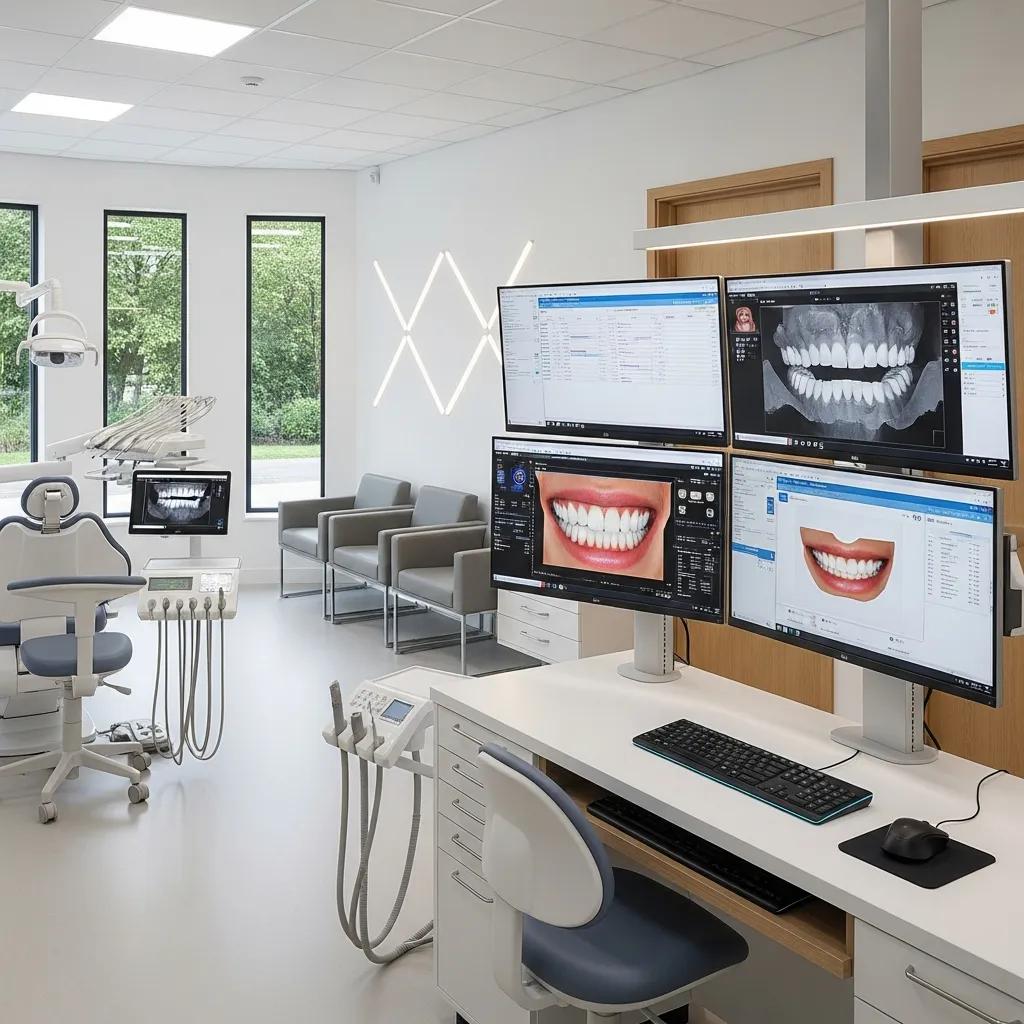
Aesthetic dentistry IT covers the combined systems, services, and security controls designed specifically for cosmetic and smile-makeover practices. These solutions help streamline clinical workflows, safeguard high‑resolution images and patient records, and improve the patient experience from consultation to delivery.
This guide breaks down how managed IT, network design, cloud architecture, cybersecurity, and AI tools support Digital Smile Design, intraoral imaging, CAD/CAM workflows and in-house 3D labs — all while meeting Canadian privacy expectations such as PHIPA. You’ll find practical service elements, recommended network and storage specs, backup and recovery approaches for very large imaging files, and considerations for integrating AI and tele‑dentistry to reduce downtime and boost throughput. We map the essential managed services, explain cybersecurity controls that prevent ransomware and data theft, compare cloud options for aesthetic imaging, and offer technical guidance for lab networks and AI rollouts so clinics can prioritise investments and have productive vendor conversations.
Managing high-resolution dental imaging — a cornerstone of aesthetic work — introduces technical complexity that often requires specialised IT attention and architecture.
Digital Radiography & PACS for Dental Imaging
The shift to digital radiography in dental settings highlights the need for a dedicated dental PACS to integrate multiple vendor systems smoothly. Dentistry presents unique imaging demands — routine diagnostic tasks often require higher resolution and tighter integration than many general medical imaging systems were designed to handle.
Enterprise-wide implementation of digital radiography in oral and maxillofacial imaging: the University of Florida Dentistry System, MK Nair, 2009
What Are the Essential Managed IT Services for Aesthetic Dental Practices?
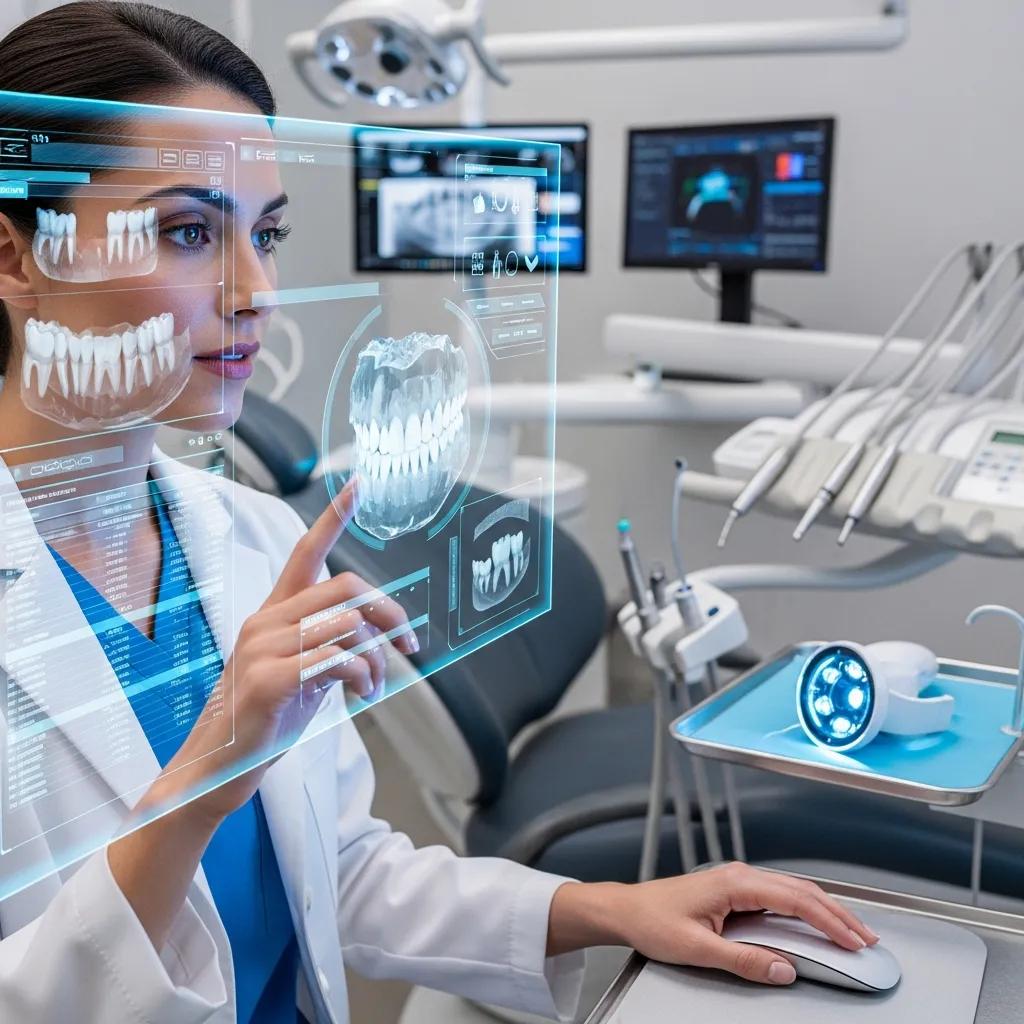
Essential managed IT services for aesthetic practices are proactive, ongoing activities that keep imaging systems, practice management software, and CAD/CAM workflows reliable and secure. Together they provide continuous monitoring, timely patching, managed backups, vendor coordination and fast support — reducing interruptions during consults and maintaining uptime for rendering and 3D printing. Below are the core managed offerings and the practical benefits clinics should expect.
- 24/7 Monitoring and Alerting: Always-on device and network monitoring to spot problems before they interrupt imaging or printing.
- Patch and Release Management: Scheduled updates for workstations and imaging software to preserve compatibility with Digital Smile Design tools.
- Managed Backup and Disaster Recovery: Automated, tested backups that protect multi‑gigabyte patient images and case files.
- Remote Helpdesk and Onsite Escalation: Rapid technical support to keep clinics running during busy consult days.
- Vendor and License Management: Coordinated updates and driver support across imaging and CAD/CAM vendors.
This comparison table shows how each managed service translates into tangible benefits for aesthetic dentistry workflows.
| Service | What it includes | Benefit for aesthetic dentistry |
|---|---|---|
| Monitoring & Alerting | Device, network and application health checks | Faster detection and resolution of imaging or printer faults |
| Patch Management | OS and app updates with compatibility checks | Fewer software conflicts during design sessions |
| Backup & DR | Hybrid on‑site + cloud backups and tested restores | Protects high‑res images and lowers RTO/RPO risks |
These managed services reduce operational friction and form the foundation for advanced workflows like AI‑assisted simulations. If you want a partner that handles audit, takeover, upgrades and ongoing maintenance, DentalTek offers managed services built for dental clinics and can demonstrate real-world workflow continuity and image protection.
How Do Managed Services Support Digital Smile Design and Cosmetic Dentistry?
Managed services keep Digital Smile Design running smoothly by maintaining the software environment, GPU drivers and storage paths required for high‑resolution rendering. Scheduled updates, driver checks and configuration management preserve rendering performance and prevent surprise incompatibilities during patient consults. File strategies that combine a fast local NAS with tiered cloud archiving cut latency when opening large intraoral scans and photographic records. By coordinating license renewals and timing software updates around clinic schedules, managed services minimise interruptions to patient-facing design sessions and keep simulations reproducible — leading to faster case turnaround and better patient satisfaction.
What Network Support Solutions Optimize Aesthetic Dentistry Clinic Operations?
Network support for aesthetic clinics focuses on segmentation, QoS, bandwidth planning and robust wireless design so imaging transfers, CAD/CAM uploads and 3D printer traffic don’t compete with guest or admin networks. VLANs that separate clinical devices from guest Wi‑Fi and office stations reduce the attack surface and give predictable throughput for large file transfers. QoS policies prioritise imaging and printing traffic so render and upload times stay stable during peak hours. Regular network assessments and SLAs for latency and packet loss help clinics schedule storage and backup windows that won’t interrupt consults. Use this checklist to validate essential network components during an audit.
- VLAN segmentation for clinical devices, lab equipment and guest networks.
- QoS rules that prioritise imaging and CAD/CAM traffic.
- Enterprise‑grade wired switches and managed Wi‑Fi sized for clinic capacity.
Optimising the network keeps digital workflows predictable — a prerequisite before introducing cloud backups or on‑prem 3D print farms that rely on steady throughput.
How Does Cybersecurity Protect Patient Data in Aesthetic Dental Clinics?
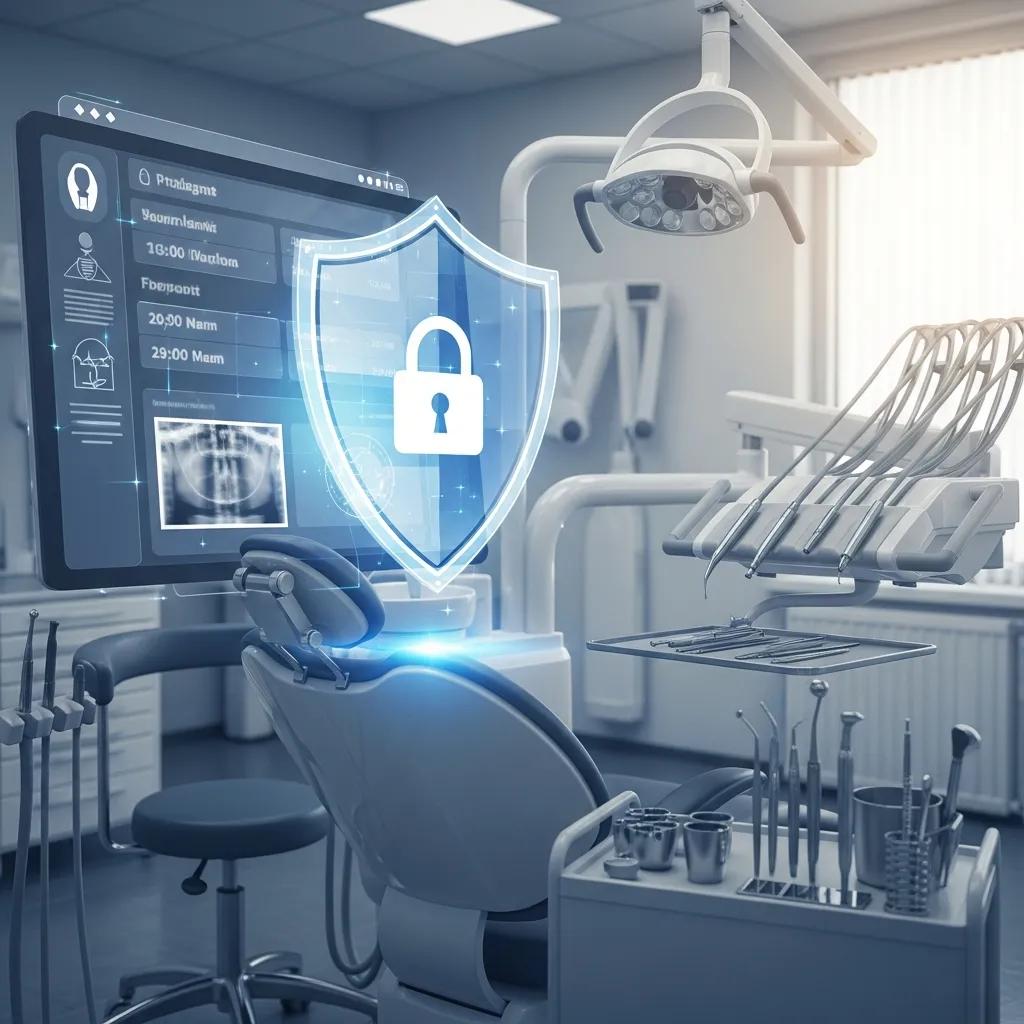
Cybersecurity for aesthetic clinics blends technical controls, policies and staff training to reduce the risk of breaches that could expose patient records, cosmetic images and payment data. Effective programs use encryption (at rest and in transit), endpoint protection, network segmentation, monitored and air‑gapped backups, and tested incident response plans to limit impact and speed recovery. These measures lower the chance of ransomware encrypting key imaging repositories or attackers exfiltrating valuable cosmetic case files. Prioritise these protections first.
- Encryption (in transit and at rest): Keeps high‑resolution images and records safe during storage and transfer.
- Endpoint Detection & Response (EDR): Detects and contains malicious activity on imaging and CAD/CAM workstations.
- Immutable or Air‑Gapped Backups: Ensures recoverability if production systems are compromised.
- Staff Training & Phishing Simulations: Reduces credential theft and social‑engineering success.
Before adopting cloud or AI tools, map these controls to PHIPA requirements and document them for audit readiness. The following table links specific protections to their operational and compliance impact.
| Protection | How it works | Compliance/Operational impact |
|---|---|---|
| Encryption | TLS for transfers and disk encryption for storage | Meets key data‑in‑transit and at‑rest safeguards |
| EDR & SIEM | Monitored telemetry and alerting for endpoints and network | Faster detection and forensic capability |
| Immutable Backups | WORM or air‑gapped copies | Shortens recovery time and supports compliance audits |
Many clinics then pursue an external security audit to validate their posture. DentalTek provides managed cybersecurity — including continuous monitoring, endpoint protection and backup/DR — and can perform a tailored security audit and compliance review for aesthetic practices.
What Are PHIPA and HIPAA Compliance Requirements for Cosmetic Dentistry IT?
PHIPA (Canada) and HIPAA (U.S.) require administrative, technical and physical safeguards for personal health information, including images and treatment plans used in cosmetic dentistry. In practice, this means enforcing access controls, audit logging, encryption, data minimisation and breach notification procedures, supported by clear policies and staff training. Ransomware resilience needs immutable backups and tested restores; access control calls for role‑based permissions on imaging and practice management systems. When data crosses borders or is handled by third‑party vendors, contractual safeguards and vendor assessments are essential. Compliance is ongoing — a cycle of monitoring, testing and policy updates that dovetails with managed IT and security services.
Which Cyber Threats Specifically Target Aesthetic Dental Practices?
Aesthetic practices face threats such as ransomware that targets high‑value imaging stores, phishing campaigns aimed at administrative staff to capture credentials, and opportunistic attacks on poorly secured Wi‑Fi or exposed remote access. Cosmetic imaging and treatment records are valuable for extortion or resale, and POS systems may expose payment card data. Insider risk from unmanaged personal devices or weak credential practices also increases exposure. Mitigation requires layered controls — MFA, segmentation, EDR — paired with procedural measures like least‑privilege access and regular security drills. These controls inform backup design, segmentation choices and staff training priorities.
What Cloud Solutions Enhance Digital Smile Design and Aesthetic Imaging?
Cloud options for Digital Smile Design include hybrid backup setups and SaaS practice platforms that integrate imaging links and tele‑dentistry workflows. The right choice balances storing multi‑gigabyte intraoral scans with clinicians’ need for fast access during consults. Hybrid approaches — fast local NAS for active cases plus cloud archival for long‑term retention — combine speed with scalable storage. Trade‑offs include retrieval latency for large files, encryption and key management responsibilities, and SLA‑backed restore windows for clinical continuity. The table below outlines suitable options by data type and retention needs.
| Cloud Solution | Data types supported | SLA / Retention guidance |
|---|---|---|
| Hybrid (Local NAS + Cloud Archive) | Large STL, OBJ and multi‑gigabyte scans | Fast local access with cloud archival per retention policy |
| Cloud Object Storage (IaaS) | Archived images and case records | Flexible retention; implement lifecycle policies |
| SaaS Practice Management | Patient records with imaging links | Vendor SLAs for uptime; confirm exportability |
Design cloud backups for cosmetic imaging with deduplication and chunking to reduce bandwidth and cost, enforce strong encryption and run periodic restore tests. These practices make sure cloud adoption supports clinical performance and audit requirements rather than introducing latency or risk.
- Adopt a hybrid backup approach — local fast restores plus cloud archival.
- Use client‑ or server‑side encryption with proper key management for image stores.
- Run regular restore tests focused on large imaging workflows to validate RTO/RPO.
These steps help cloud solutions support clinic performance and regulatory needs without slowing consults.
How Does Cloud Backup Secure High-Resolution Cosmetic Dentistry Data?
Cloud backup secures aesthetic dentistry data by combining local snapshots for fast restores with immutable cloud copies for disaster recovery and compliance. Deduplication, compression and incremental transfers reduce the volume of multi‑gigabyte scan replication, while encryption in transit and at rest protects patient images. Typical RTO/RPO targets for active cosmetic cases call for next‑business‑hour local restores and defined SLA windows for cloud restores. Regular restore testing and retention aligned with record‑keeping rules ensure archived cases are retrievable for follow‑up or audits. Isolating backups from production networks and monitoring their integrity completes a resilient backup posture.
What Are the Benefits of Cloud-Based Practice Management for Aesthetic Clinics?
Cloud practice management gives clinicians and admin staff secure remote access to schedules, imaging links, treatment plans and patient communications, streamlining consults and consent. Centralised records speed case acceptance, simplify consent capture and make multi‑location scaling easier for clinics offering aesthetic services across sites. Trade‑offs include reliance on connectivity and the need to verify exportability and data portability. When paired with secure tele‑dentistry, cloud platforms improve patient engagement for pre‑ and post‑procedure care and enable analytics that boost cosmetic case conversion.
How Is Network Infrastructure Designed for In-House 3D Printing and CAD/CAM in Aesthetic Dentistry?
Networks for in‑house 3D printing and CAD/CAM labs prioritise storage throughput, lab isolation and predictable bandwidth so print jobs and STL transfers don’t interfere with imaging or office systems. Typical designs include dedicated VLANs for lab gear, high‑throughput wired switching and NAS or SAN storage optimised for concurrent read/write patterns. CAD/CAM workstations need GPUs and fast local caches to speed rendering and slicing. The table below gives practical spec recommendations for clinics bringing manufacturing in‑house.
| Component | Requirement / Spec | Recommended configuration |
|---|---|---|
| Network Switches | Low‑latency, managed devices | 1GbE minimum, 10GbE for central storage with VLAN support |
| Storage | High IOPS and throughput | NAS with SSD cache or SAN for concurrent jobs |
| Workstations | GPU and fast local storage | GPU workstation with NVMe local cache |
Use this concise checklist to confirm your lab design supports sustained print throughput and fast file handling.
- Isolate lab traffic on a dedicated VLAN to prevent contention with clinical systems.
- Provide wired 1GbE per printer as a baseline; consider 10GbE for central storage pools.
- Deploy NAS with SSD caching and versioned storage for STL/CAD files.
These choices reduce print failures, shorten turnaround and keep smile‑design iterations responsive so clinicians can show realistic outcomes during consults.
What IT Requirements Support 3D Printing Labs in Cosmetic Dental Practices?
3D printing labs need robust local storage for concurrent job queues, file versioning for STL/CAD assets, print‑queue management and clear integration points with CAD/CAM tools and intraoral scanners. A local NAS with SSD caching or a tiered SAN eases bottlenecks when multiple prints run simultaneously. Metadata tagging and version control improve traceability for iterative cases and prevent accidental overwrites. Workstations should be GPU‑accelerated with high‑speed network interfaces to move files quickly to print queues. These practices help labs deliver predictable print cycles and integrate with clinical scheduling for same‑day or rapid turnaround cosmetic cases.
How Does Network Optimization Improve Digital Dentistry Infrastructure?
Network optimisation helps by applying QoS policies, VLAN segmentation and continuous performance monitoring so imaging, rendering and print traffic get priority over less critical services. Tuning QoS for the right ports and protocols lowers latency during live consults when clinicians review high‑res images. Tracking KPIs — latency, average transfer times for imaging files and packet loss — enables proactive capacity planning and targeted upgrades. A practical optimisation plan includes baseline measurements, QoS rules, controlled failover tests and periodic reassessment as the clinic grows. Monitoring data then drives smarter upgrades to switches, uplinks and storage tiers to sustain service levels for cosmetic workflows.
How Does AI-Powered IT Support Transform Diagnostics and Virtual Consultations in Aesthetic Dentistry?
AI in aesthetic dentistry powers image analysis for diagnostics, outcome simulation for smile design, and predictive scheduling to improve consult conversion. These workloads need secure data pipelines, GPU compute and governance that verifies model outputs against clinical standards. When implemented carefully, AI can flag potential pathology in scans, automate measurements for treatment plans, and generate realistic outcome simulations that help patients visualise results. Deploying AI requires privacy controls, model validation and integration with practice management and imaging systems so outputs remain auditable and clinically useful.
What AI Technologies Are Integrated into Aesthetic Dental IT Solutions?
AI tools for aesthetic dentistry include image‑analysis models for triage, generative outcome simulators for smile visualisations, and ML models for appointment optimisation and patient triage. Convolutional networks are often used to detect features or segment tissues, while generative models produce treatment visuals from prior case libraries. These solutions need annotated datasets, secure training pipelines and validation workflows. From an IT standpoint, expect GPU servers or cloud GPUs, encrypted training and inference stores, and model versioning for governance and performance tracking.
How Do Tele-dentistry IT Solutions Facilitate Virtual Aesthetic Consultations?
Tele‑dentistry platforms enable virtual aesthetic consults with secure video, high‑resolution image sharing and integrated documentation that ties back to patient records and treatment plans. Good teleconsult tools use bandwidth‑adaptive video, encrypted file transfers for photos and scans, and session capture into the practice management system for consent and follow‑up. Plan bandwidth for simultaneous consultations that might include screen‑sharing of 3D simulations or high‑res images. Embed consent workflows and secure messaging so consult notes and aftercare instructions remain part of the patient record, smoothing the path from virtual consult to in‑clinic treatment.
Clinics adopting AI and tele‑dentistry must pair those tools with strong managed IT and cybersecurity to protect patient data and deliver reliable performance. For practices seeking a partner that understands dental workflows, DentalTek provides specialist guidance across managed services, network support, cybersecurity and cloud backup tailored to aesthetic dentistry clinics.
Frequently Asked Questions
What are the key benefits of using AI in aesthetic dentistry?
AI improves diagnostic consistency, speeds routine measurements and creates compelling outcome simulations that help patients make decisions. It can flag anomalies in scans, automate measurement extraction for treatment planning and predict scheduling gaps to increase clinic efficiency. Properly validated AI tools raise confidence in planning and improve the patient experience.
How can aesthetic dental clinics ensure compliance with PHIPA?
To meet PHIPA, enforce role‑based access, keep detailed audit logs, and encrypt data in transit and at rest. Maintain clear, documented privacy policies, run regular staff training, and perform periodic audits. Have breach notification procedures and vendor contracts that demonstrate due diligence when third parties handle PHI.
What role does network segmentation play in dental IT security?
Network segmentation isolates clinical devices from guest and administrative networks, reducing the attack surface and limiting lateral movement if a device is compromised. Implement VLANs to prioritise imaging and CAD/CAM traffic while keeping less trusted devices separated, and review segmentation regularly as devices and services change.
What are the challenges of integrating tele-dentistry solutions?
Common challenges include ensuring secure, high‑quality video and image transfer, accounting for bandwidth when multiple consults run concurrently, training staff, and maintaining PHIPA compliance for remote sessions. Addressing these areas early makes tele‑dentistry a reliable extension of in‑clinic care.
How do cloud solutions impact data management in aesthetic dentistry?
Cloud platforms offer scalable storage and easy access to records and imaging, enabling hybrid backup strategies that combine local speed with cloud retention. They simplify collaboration and multi‑site operations but require careful encryption, lifecycle policies and exportability checks to protect patient data and maintain flexibility.
What are the best practices for managing high-resolution dental imaging data?
Use a hybrid backup model with fast local restores and cloud archival, run regular restore tests, and apply encryption for data at rest and in transit. Maintain tidy file structures and version control to streamline workflows and ensure clinicians can quickly retrieve the correct imaging assets.
How can clinics prepare for potential cybersecurity threats?
Prepare by layering defenses: endpoint protection and EDR, up‑to‑date patching, network segmentation, MFA, and immutable backups. Conduct vulnerability scans and penetration tests, train staff on phishing awareness, and maintain an incident response plan so you can act quickly if a breach occurs.
Conclusion
Modern IT tailored for aesthetic dentistry improves clinic efficiency and patient care by protecting imaging, reducing downtime and enabling advanced workflows like AI and in‑house printing. With managed services, strong cybersecurity and sensible cloud design, clinics can protect sensitive data while delivering faster, more predictable outcomes. Learn how DentalTek’s specialised services can help transform your practice — from audit to ongoing support.